History and legend
Galata Tower history and legend
From the Genoese watchtower of 1348 to prison, fire lookout and museum, and what is and is not known about the man said to have flown from it.
Book your climb ↗Quick answer
Galata Tower was built by the Genoese in 1348, at the highest point of their colony's walls, and named Christea Turris, the Tower of Christ. After 1453 it was a prison, and from 1717 a fire lookout. Its cone roof dates from the 1960s. The story of Hezârfen Ahmed Çelebi flying from it to Üsküdar rests on one 17th-century source and is best read as a legend.
The Genoese in Galata
The tower belongs to a colony. After the Byzantines retook Constantinople in 1261, the Byzantine emperor granted the Galata quarter to the Genoese in 1267. An agreement of 1303 set the colony's limits and banned fortifications, but the Genoese enlarged their walls anyway. The quarter is often called Pera in old documents, from a Greek phrase meaning the fig field on the other side. It lay across the Golden Horn from the Byzantine city, and the Genoese held it until the Ottoman conquest of 1453.
The tower of 1348
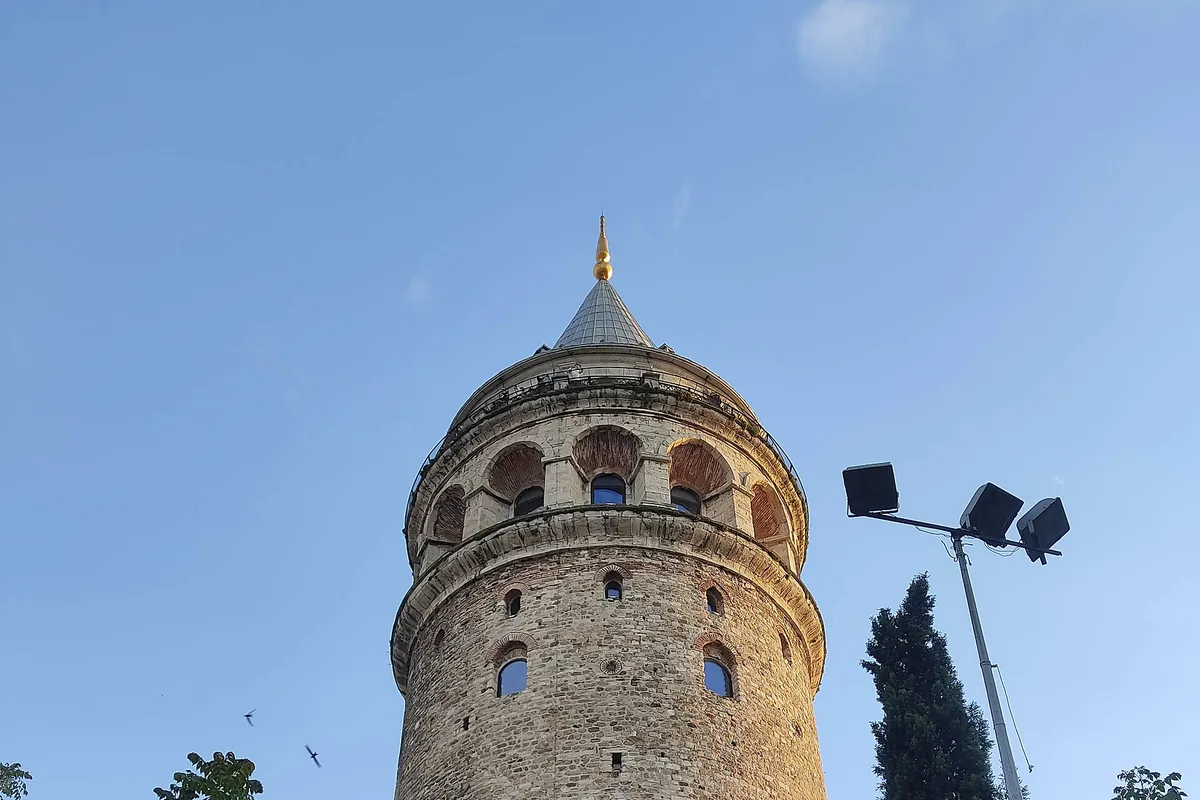
The Genoese raised the tower in 1348 in Romanesque style and named it Christea Turris, which means Tower of Christ. It stood at the highest point of the colony's walls and served as a watchtower. When it was finished it was the tallest building in the city. An earlier Byzantine-era tower, destroyed in 1204, was a separate structure. The tower you see today is the medieval stone drum, with an architectural height of 62.59 metres excluding the ornament on top, an outer diameter of 16.45 metres at the base and walls 3.75 metres thick.
Prison and fire lookout
After the Ottoman conquest of 1453 the tower was turned into a prison. From 1717 it served as a fire lookout. A fire in 1794 badly damaged the stairs. Most of the Genoese walls were pulled down in the 19th century as the city grew northward, and only a small part of them survives near the tower, so the tower is the most substantial surviving relic of the Genoese walled enclave. That survival owes something to its usefulness: a tower that still had a job was a tower that was kept, repaired and not demolished with the walls around it.
Rebuilding the cone
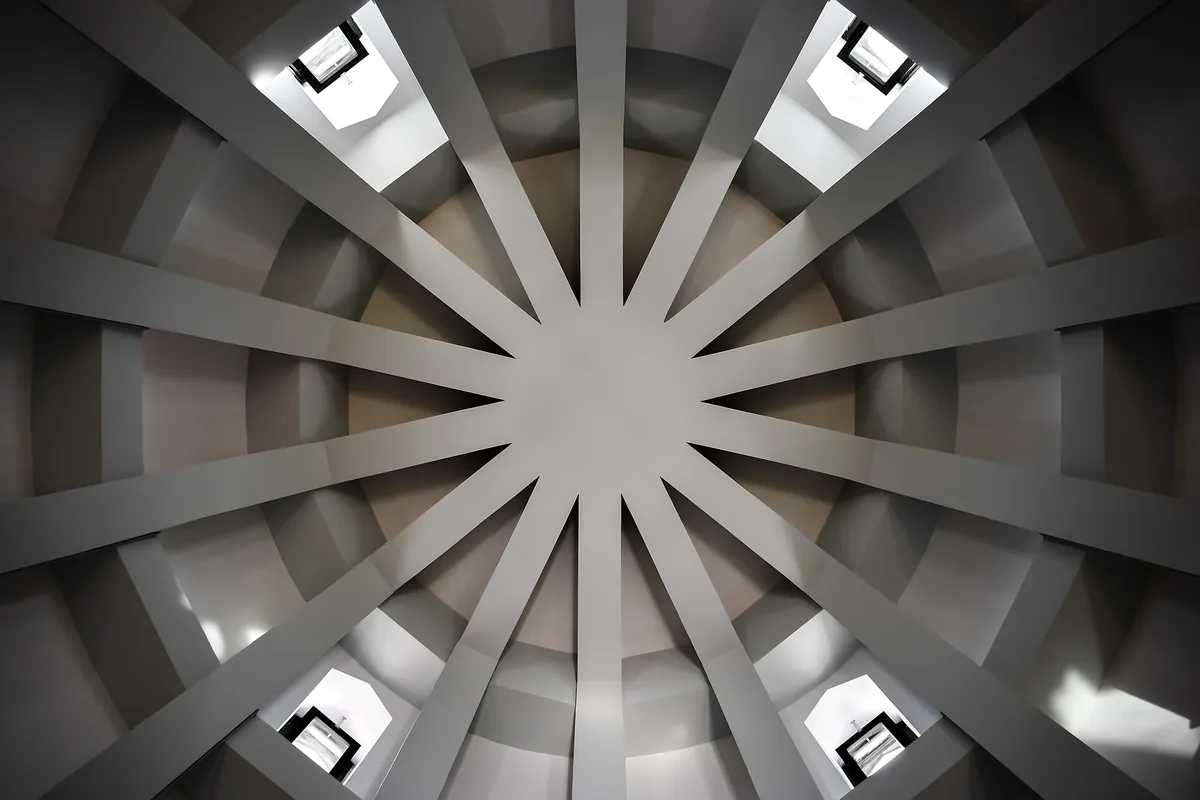
The tower has been repaired many times. Between 1965 and 1967 the conical roof was rebuilt and the wooden interior was replaced with concrete, before the tower opened to the public. It was restored and reopened as a museum in 2020. So the stone drum is medieval, while the roof and the structure inside date from the 1960s onward. When you stand under the cone, you are looking at a reconstruction of a roof that earlier generations of Istanbul residents knew in other forms, and the shape you recognise from the skyline is a modern decision.
Keeping it standing
The tower's own website describes recent safety work. Stones had fallen from the façades and railings and tension elements had broken, so a protective tunnel three metres high was built around the base to keep visitors and the surroundings safe. Repairs to the cone roof were carried out, and the roof's earthquake strengthening is described as finished. Wikipedia adds that work from 2023 included structural reinforcement for earthquake resilience. For a visitor the result is practical: parts of the tower can be closed or arranged differently depending on the work in progress.
The tower today
Today Galata Tower is a museum and observation tower. It is on Turkey's UNESCO Tentative List as part of The Genoese Maritime Network: Trading Posts and Fortifications from the Mediterranean to the Black Sea. It is not part of the Historic Areas of Istanbul, the World Heritage property inscribed in 1985, whose four zones lie across the water in the Fatih district. The observation deck is at 51.65 metres, and the tower has lifts. The Directorate General of Foundations is listed as its owner. Which level you can stand on depends on the works under way, so check the booking page for the current arrangement.
The legend of Hezârfen Ahmed Çelebi
The most famous story attached to the tower is that of Hezârfen Ahmed Çelebi, an Ottoman scientist and inventor who lived from 1609 to 1640. The 17th-century traveller Evliya Çelebi writes that Ahmed practised flights with eagle-like wings, then flew from the top of Galata Tower and landed in Doğancılar Square in Üsküdar, helped by a south-west wind. Sultan Murad IV is said to have watched, rewarded him with a sack of gold and then exiled him to Algeria, where he died. Evliya Çelebi is the only source, and Wikipedia calls the story of doubtful reliability. Treat it as a legend.
Legend and record, side by side
It helps to keep what is known apart from what is told. The list below separates the two, using the sources named at the foot of this page, and the same split is a useful habit when a guide or a sign repeats the story. The date of the flight is itself uncertain: one Wikipedia article places the events around 1630 to 1632 and another gives 1638, which is a good reason to say only that the story belongs to the 17th century.
- Recorded: the tower was built in 1348 as the Christea Turris
- Recorded: it was a prison after 1453 and a fire lookout from 1717
- Told: a flight from the tower to Üsküdar, known from one writer
- Told: a reward and then exile to Algeria, from the same account
Reading the tower with the facts in hand
Knowing the layers makes the visit easier to read. The thick-walled stone drum is Genoese work of 1348, built as a watchtower. The cone above it is a 20th-century reconstruction. The museum floors and the viewing level are modern uses of a medieval shell. The hill's height still gives visitors the long view of the old city across the water. If a guide or a sign offers a date for the flight, treat it as part of the legend rather than as a fact about the building.
Seeing Genoese Galata on foot
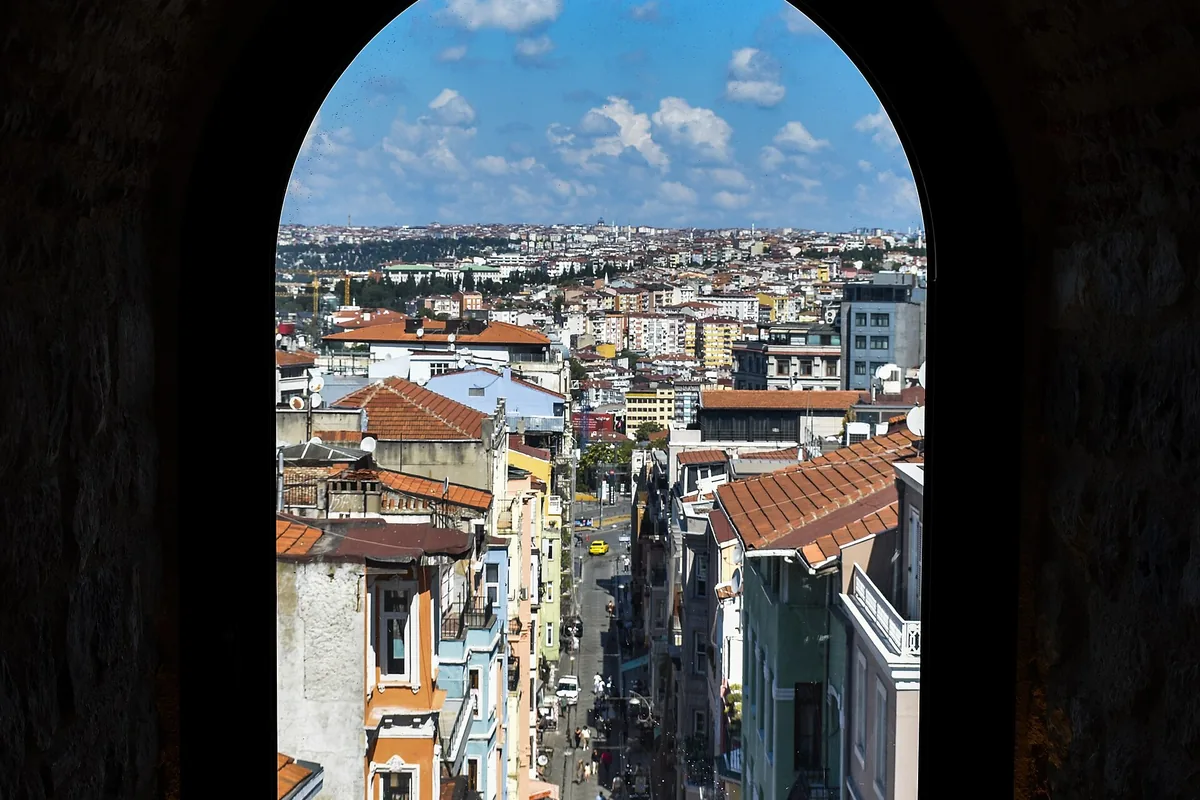
The tower is the best-preserved piece of the colony, but the neighbourhood around it carries other layers. Karaköy has been a port since Byzantine times, and Voyvoda Street became a banking and insurance district. The Camondo Stairs were built by the banker Abraham Camondo, and a short stretch of the Genoese walls survives near the tower. Walking from Karaköy up to the tower, rather than taking the funicular, puts these layers in the order they were laid down.
Read next: Galata Tower and Istanbul's old city
Who this history isn't for
If you came for a single date and a neat story, the tower may disappoint: it has been a watchtower, a prison, a fire lookout and a museum, and its interior was rebuilt in the 1960s. Nor should you expect to stand where Hezârfen is said to have jumped and see proof of his flight. The visit works best for people who like to read a place in layers, with the view over the Golden Horn as the reward, and who are content that the best story about the tower is a legend.
Frequently asked questions
Who built Galata Tower and when?
The Genoese built it in 1348 and called it Christea Turris, the Tower of Christ. It stood at the highest point of their colony's walls, across the Golden Horn from Byzantine Constantinople, and served as a watchtower. It was then the tallest building in the city.
How tall is Galata Tower?
The architectural height is 62.59 metres, excluding the ornament on top. The observation deck is at 51.65 metres. The tower is 16.45 metres across at the base, with walls 3.75 metres thick.
What was the tower used for after 1453?
After the Ottoman conquest it became a prison. From 1717 it was a fire lookout. Today it is a museum and observation tower.
Is the story of Hezârfen Ahmed Çelebi true?
It is a legend. The only source is the 17th-century traveller Evliya Çelebi, and Wikipedia describes the story as of doubtful reliability. The account has him landing in Üsküdar and later being exiled to Algeria. Nothing independent records the flight.
Is the cone roof original?
No. The conical roof was rebuilt between 1965 and 1967, when the wooden interior was also replaced with concrete, before the tower opened to the public. The stone drum below it is medieval. Roof repairs followed in 2023.
Is Galata Tower a World Heritage Site?
Not yet. It is on Turkey's UNESCO Tentative List as part of a Genoese trading-posts network. It is separate from the Historic Areas of Istanbul, which were inscribed in 1985.
Sources